
30% off first MonthAll Promos

ChartVPS Enterprise

Trading Infrastructure For Firms And Platforms

Sell trading servers under your brand, bundle them with your platform, or run your firm's quantitative research and live strategies. We manage the infrastructure behind your customers and trading operation.

SOC 2 Type I Report Issued · Type II Underway
Isometric illustration of ChartVPS servers connected to a branded client portal, a software integration and a trading desk

Enterprise

Three Ways To Work With ChartVPS

Isometric ChartVPS-branded server rack cabled to a partner dashboard with its own logo slot

Your Brand

Resellers

Offer trading servers under your own brand, with your pricing and customer relationships. ChartVPS operates the underlying infrastructure, so adding hosting to your business does not mean building a server operation from scratch.

Explore White-Label Resale


Isometric application window with a puzzle piece cabled into a server

Your Ecosystem

Integrators

Make a ready-to-run environment part of your trading software, brokerage service, or platform. Bundle infrastructure into the customer experience, with provisioning connected to your systems where needed. For NinjaTrader-based copy-trading services, TradeCopy adds a private network between the lead and receiving workspaces.

Discuss An Integration
Isometric bank building next to a trading chart and a server

Your Operation

Trading Firms & Institutions

Put model validation, portfolio simulations, and live execution on infrastructure built for the workload. ChartVPS works with hedge funds, systematic trading firms, and quant research teams to size research capacity and keep production trading in its own environment.

Discuss Your Firm's Workload

Research & Execution

Built Around The Trading Work

A hosted trading platform, a fund's research environment, and a live execution server have different demands. We size the infrastructure around the work, not just the number of users.

  • Quantitative Research
  • Live Execution & Operations
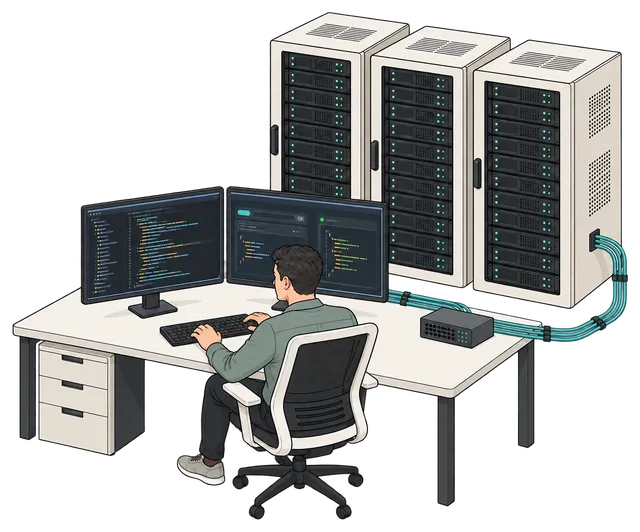
Isometric illustration: a quantitative research platform with data storage and backtest charts, cabled to a separate live execution platform with trading screens and a server rack

Live Platforms And Automation

Run market-data feeds, strategy calculations, execution services, and position monitoring with capacity sized for busy sessions. For systematic trading and latency-sensitive automation, server processing and the route to the broker or exchange are part of the same infrastructure decision.

Quant Research And Portfolio Testing

Process historical datasets, test factors, and run parameter sweeps with compute, memory, and storage sized for the research. Separate backtesting and portfolio simulations from production so a long research run does not compete with a live strategy.

Customer And Team Deployments

Define the application setup, capacity, and support process before expanding across customers or desks. A deployment should be repeatable, not depend on whoever remembers how the first server was configured.

Hardware Behind The Workload

The current Partner API offering runs on AMD Ryzen 9 9950X nodes in Chicago, with mirrored NVMe storage. For broader Enterprise requirements, we review the applications, locations, and operating needs with your team before agreeing the configuration.

Our Infrastructure

TradeCopy / Trading VPC

Private Trade Replication

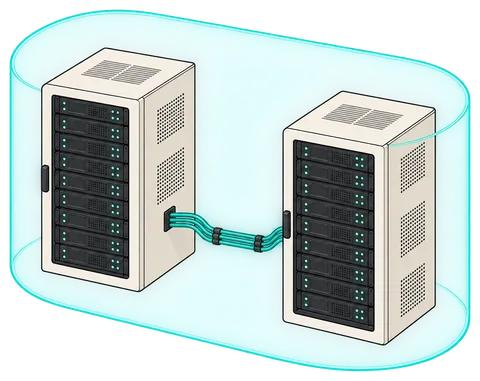
TradeCopy gives NinjaTrader and Replikanto deployments a trading VPC: an isolated private network connecting master and copy servers. Copy instructions move between connected ChartVPS nodes at <1ms latency instead of taking public internet routes.

Prop desks and signal providers can replicate a lead strategy across authorized accounts while keeping the trading workspaces on separate servers.

Explore TradeCopy
01

Master Server

The lead NinjaTrader and Replikanto workspace sends the copy instruction.

02·Private ChartVPS Network<1ms

Private Copy-Signal Path

Instructions travel inside the TradeCopy VPC between connected servers.

03

Copy Servers

Receiving workspaces replicate the instruction across authorized accounts.

<1ms refers to the private copy-signal path, not broker processing or exchange fills. TradeCopy setup and management are scoped with your deployment.

The Operating Relationship

A Clear Split Of Responsibilities

Infrastructure management should take work off your team, not leave everyone guessing who owns the problem. We agree the operating and support relationship around how you use the service.

Your Brand And Customer Relationship

Your branding, your hostnames, your pricing. ChartVPS works behind your team, handling the infrastructure and escalated server issues. You remain responsible for the offer, the customer relationship, and first-line support.

You Handle

  • Your product, branding, and customer communications.
  • Retail pricing and customer billing.
  • Onboarding and first-line support.
  • Your customer systems and any API integration.

ChartVPS Handles

  • Physical hardware and network operations.
  • Server provisioning through the Partner API.
  • Infrastructure support escalated by your team.
  • Partner usage reporting and billing.
Review The White-Label Setup With Us

Commercial Terms

Terms That Fit The Deployment

Agree The Costs Before Rollout.

Resellers need a clear infrastructure cost behind their retail price. Integrators need to understand the cost of delivering a hosted product. Funds and research teams need to budget for production capacity and intensive testing without treating them as the same workload.

We agree the configuration, rates, support responsibilities, and service commitments before rollout. The billing details here describe the Partner API offering; the terms for your Enterprise deployment are confirmed in your agreement.

Read The Billing Details

Partner API Billing

Hourly Billing,
With A Monthly Cap
Servers are billed in started hours, with a per-server monthly cap defined in your partner pricing. Failed provisioning attempts are not billed.
Rates Agreed For Your Account
Your server catalogue, rates, and discount rules are set out in a private rate schedule. Review the costs before you provision, not after the invoice arrives.
Volume Pricing
Discounts can follow monthly usage or the number of allocated servers. The agreed model determines how your fleet qualifies and when rates apply.
Usage And Estimates
See charges by plan and server, alongside month-end projections and the next invoice estimate. Reconcile infrastructure costs with your own records.

Suspension does not stop billing. Deleting a server ends its billing interval and removes its data and backups. Keep anything you need before deletion.

Partner API

Connect Provisioning To Your Systems

For deployments using the Partner API, provisioning can start in your checkout, product onboarding, or an internal tool. Create servers, follow their status, and store the server IDs against the customer or team records in your own system.

  1. 01

    Check The Configuration

    Use a dry run to validate the requested plan and see the price before creating a server.

  2. 02

    Provision And Follow Progress

    Submit the request, then follow status through polling or signed event notifications. Confirm the application is ready before handing the workspace to its users.

  3. 03

    Manage The Fleet

    Reboot, rebuild, apply deletion protection, and review usage from your own system. Backup and restore operations depend on the selected plan's backup support.

  4. 04

    Retry A Create Request Safely

    A unique request key prevents a timed-out server-creation request from turning into a second server when retried with the same details within the documented window.

Explore The Partner API
POST /v1/serversDry Run
curl https://enterprise.chartvps.com/v1/servers \
  -H "Authorization: Bearer $API_KEY" \
  -H "Content-Type: application/json" \
  -d '{
    "name": "trader-0417",
    "plan": "standard-2",
    "region": "chicago",
    "image": "ubuntu-24.04",
    "dry_run": true
  }'
Illustrative catalogue values. A dry run checks configuration and pricing without creating or charging for a server.

Security & Accountability

Security For Institutional Due Diligence

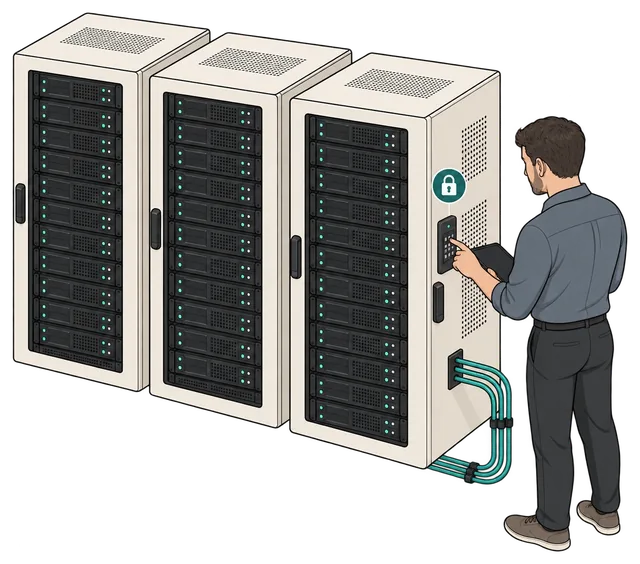
Isometric server racks beside a shield with a checkmark, a key and a padlock

SOC 2 Type IType II underway.

ChartVPS holds a SOC 2 Type I report and is in its Type II observation window, with an independent auditor verifying our controls over time. For hedge funds, brokers, and software partners assessing an infrastructure provider, security review is part of the deployment process.

We work with your technical and operations teams to establish access requirements, support escalation, and service responsibilities before rollout.

Discuss Your Security Requirements

Partner API Access Controls

These controls cover the Partner API. Server user accounts, application permissions, and your firm's wider access requirements are separate parts of deployment planning.

Account-Scoped Access

API requests are limited to the servers and resources owned by your partner account.

Managed Credentials

Use labelled API keys to separate integrations and rotate credentials. Revoke keys you no longer need.

Restricted Network Access

API access is restricted to approved source networks, reducing where requests can originate.

Signed Event Notifications

Verify incoming webhook signatures before your system acts on a server event. The event log lets you recover notifications your integration missed.

Authentication And API Limits

Deployment

Start With The Workload

Bring us the platform you are delivering or the research and execution workloads your firm runs. We work through capacity, broker and exchange connections, security requirements, and any private trade-copying setup with your team.

  1. Step 01

    Review The Workload

    Hosted applications, data pipelines, backtests, live strategies, and location needs.

  2. Step 02

    Agree The Scope

    Configuration, pricing, security review, support responsibilities, and service commitments.

  3. Step 03

    Prepare The Deployment

    Set up the operating environments and any agreed provisioning, product integration, or TradeCopy network.

  4. Step 04

    Test, Then Roll Out

    Validate a small deployment first. Check application access, workload performance, billing, and support escalation before expanding.

Discuss Your Setup

Enterprise FAQ

Frequently Asked Questions

Specific requirements? Talk them through with our team.

Contact Us
Enterprise covers infrastructure resale, integration into another product, and deployments for an organization's own use. The configuration and operating relationship follow that use case. For an individual trading setup, compare Alpha, Gamma, and Delta on the pricing page.
Yes. Hedge funds, systematic trading firms, and quant research teams can use Enterprise entirely for their own operation. That includes historical data pipelines, factor research, model validation, portfolio simulations, and production trading systems. We scope compute, storage, connectivity, and separate research and live environments around the firm's requirements.
ChartVPS holds a SOC 2 Type I report and is in its Type II observation window, with annual re-audits after that. The Type I report is available under NDA, and the Type II report will follow once the observation window closes. Your firm's vendor review should consider the report's scope alongside the proposed deployment, access arrangements, and service agreement. ChartVPS's audit does not automatically make a customer's trading application or organization SOC 2 compliant.
TradeCopy supports NinjaTrader and Replikanto workflows for prop desks, signal providers, and businesses integrating trade replication into their service. It connects master and copy servers through a trading VPC, an isolated private network between ChartVPS servers, with <1ms copy-signal latency between connected nodes. We scope the servers, setup, and ongoing management with your team. The latency figure describes the private copy path, not broker processing, exchange execution, or identical fills across accounts.
A reseller offers infrastructure as a service under its own brand. An integrator makes infrastructure part of a wider product, such as a hosted trading platform or a software subscription with a ready-to-run environment. The distinction is what your customer is buying and how you deliver it. Some businesses do both.
Yes. You control the customer-facing offer, pricing, hostnames, and communications. ChartVPS runs the underlying infrastructure and handles support escalations from your team. We review the customer-facing setup during onboarding.
For resale, your team handles first-line customer support and escalates infrastructure issues to ChartVPS. For product integrations and internal deployments, we agree the support relationship with your team around the application and operating requirements. Responsibilities and service commitments are established before rollout.
Usage is counted in started hours, subject to the monthly cap and discount rules assigned to your account. Failed provisions are not billed. Suspended and rebuilding servers remain billable; billing ends when deletion is accepted. The API reports usage and estimates so you can reconcile costs with your own records.
The current Partner API catalogue is based in Chicago on Ryzen 9 9950X nodes. The API returns the regions, operating-system images, and plans available to your account. For other Enterprise deployments, we review location and OS requirements as part of the proposed configuration. A retail listing is not confirmation that the same configuration is available through the Partner API.
Yes. Your checkout or account system can validate a configuration, request a server, and store the server ID alongside your customer record. Polling and webhooks report provisioning progress. Your integration should also check the application and credentials before telling the customer the workspace is ready.
The current Partner API offering uses one partner account with labelled API keys; separate partner sub-users are not currently available. This describes the API account, not user accounts inside a server or trading application. We review your team's access requirements before integration.
Enterprise service commitments and any applicable credits are confirmed in your agreement. The retail uptime page provides background on ChartVPS operations, but it does not replace the terms for your deployment.
Yes. The public documentation includes the OpenAPI specification, request examples, billing rules, and lifecycle behaviour. Your developers can assess the integration before the commercial discussion.

Let's Plan Your Deployment.

Bring us your platform, trading desk, or research workload. We will work through capacity, broker and exchange connectivity, security requirements, and commercial terms with you.

NinjaCators
Bold Approach
Quant Vue
Build Alpha
TradeMath
Capstone
Mythic Market Research
Dynamic Trading Bars